
APOLLO HOSPITALS · SECTOR 26 · NOIDA

When you can see clearly,
you can help precisely.

I'm Dr. Neha Nakra — an RCI-registered clinical psychologist and certified psychometrician. For nineteen years my work has been one discipline: turning "something's not right" into a picture so clear that parents, teachers and doctors finally know what to do next.

19
years of practice
RCI
registered psychologist
2
hospital affiliations
EN/HI
both, fluently
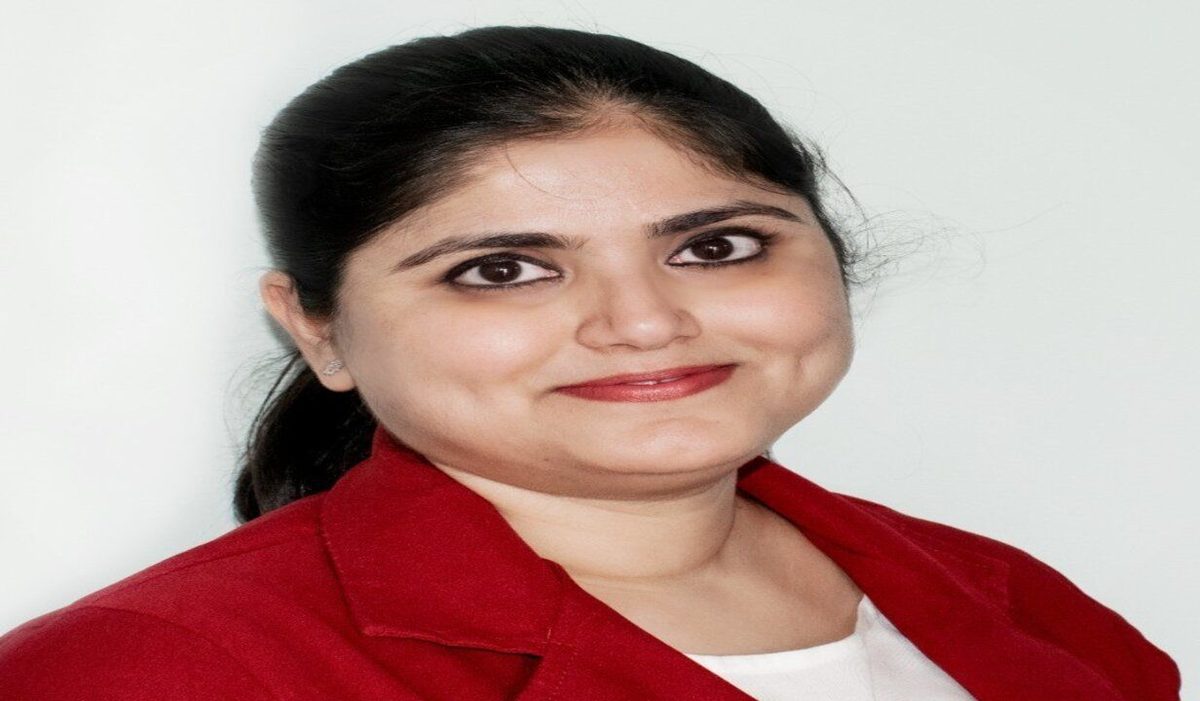
Dr. Neha Nakra — clinical psychologist in a red blazer, photographed for her Apollo Hospitals profile
FIG. 1 Dr. Neha Nakra, Clinical Psychologist — Apollo Hospitals, Noida
RCI
VERIFIED

THE USUAL PATH

  • "He's just lazy" — three teachers, two years
  • Google, then worry, then more Google
  • Well-meaning advice from everyone
  • A label someone gave in ten minutes
  • Tuition that fixes the wrong problem

THE ASSESSED PATH

  • The right question, asked once, properly
  • Standardised tests, administered correctly
  • Findings in writing — that schools accept
  • A plan: accommodations, support, next steps
  • Everyone reading from the same page

The difference isn't effort. It's measurement.

What a battery can answer

Why is reading so hard?

Cognitive & learning assessment separates "can't read" from "dyslexia" from "attention gaps" — three different problems, three different helps.

Is it ADHD — or anxiety — or both?

The most misdiagnosed overlap in childhood. Proper testing tells them apart, because their treatments are not the same.

How bright is she, really?

IQ and cognitive profiling shows ability and the uneven peaks that make school frustrating for a capable child.

What support does he qualify for?

Boards, schools and universities need documented findings. A correct report is the difference between accommodations and arguments.

See every assessment offered

"A diagnosis without assessment is a guess with confidence.
Your child deserves better than both."

ABOUT · CLINICIAN FILE

The clinician behind the report.

Nineteen years, two hospital systems, one discipline — measurement done with care. Dr. Nakra's assessments are known for being thorough, readable, and accepted where they matter: schools, boards and doctors.

Dr. Neha Nakra — clinical psychologist, Apollo Hospitals Noida
Dr. Neha Nakra · Clinical Psychologist (RCI)

CREDENTIALS

RegistrationRCI-registered Psychologist
CertificationsCertified Psychometrician · Special Educator
EducationDoctorate scholar (TWU) · M.Phil Psychology
CurrentClinical Psychologist, Apollo Hospitals — Sector 26, Noida
AlsoPsychologist, Max Hospitals
Experience19 years
LanguagesEnglish · Hindi

WHY THIS DISCIPLINE

A wrong label is expensive. It costs years of the wrong tuition, the wrong scolding, the wrong self-story — "I'm the slow one" is a sentence a child can serve for a decade before anyone tests whether it was true. Dr. Nakra's specialism is exactly this: the discipline of finding out what is actually going on — with instruments that have been validated on thousands of children, not intuition that worked on one.

As a certified special educator as well as a clinical psychologist, she doesn't stop at the findings: she reads them forward — into classroom accommodations, remediation plans, and language schools can act on. That combination is rare, and it is the difference between a report that sits in a drawer and one that changes a school year.

Apollo HospitalsConsultant · Noida
Max HospitalsVisiting psychologist

METHOD · THE PROCESS

Five steps. No surprises.

Most anxiety around assessment is about the unknown. So here is the whole journey, step by step — the same for every family, every time.

  1. 01

    Concern · the conversation

    An unhurried first meeting (in person at Apollo Noida, or online). You tell the story — school reports, reports from teachers, what you've tried. We define the exact question the assessment must answer. A vague referral produces a vague report; we don't let it.

    DURATION · 45–60 MIN confirm
  2. 02

    History · the background file

    Developmental, medical, educational and family history. Old report cards, previous evaluations, paediatric notes — everything that gives the numbers their context. This is where fifteen years of clinical experience starts earning its fee.

    INPUT · PARENTS + RECORDS
  3. 03

    Battery · the testing days

    Standardised, age-appropriate instruments — cognitive, achievement, attention, emotional — selected for your question, never a fixed package. Sessions are paced to the person being tested: fresh, fair, and without marathon fatigue that distorts scores.

    TYPICAL · 2–3 SITTINGS confirm
  4. 04

    Report · the written picture

    Findings, scores and — most importantly — their meaning, in language a parent and a teacher can both act on. Every report is written to be read, not filed: reason for referral, tests used, results, interpretation, recommendations.

    FORMAT · WRITTEN + FEEDBACK
  5. 05

    Plan · the part that matters

    A feedback session walks you through every page. You leave with the next moves — school accommodations, remediation, referrals if needed, and what to watch for. The assessment ends; the help begins.

    OUTPUT · ACTION LIST
SAMPLE · REPORT STRUCTURE sample
I.
Reason for referral — your question, in your words
II.
Tests administered — each named, each explained
III.
Summary of findings — scores with plain-language meaning
IV.
Interpretation — what the pattern adds up to
V.
Recommendations — school, home, therapy, follow-up

Illustrative structure only — your report is written for your child, your question, your school. sample content

Albrecht Dürer, Melencolia I — thought, measured: the most famous picture of a mind at work
Testing is paced, warm and transparent — a child should leave feeling competent, not examined. Albrecht Dürer, Melencolia I (1514) · public domain

ASSESSMENTS · THE BATTERY

Six ways to stop guessing.

Each battery is assembled for the question you bring — these are the instruments that most often answer it. Fees on request [[—]], because the honest price depends on the battery, not a flat rate.

A·01

Cognitive & IQ assessment

Answers: how does this mind learn — its strengths, its uneven peaks, its honest ceiling?

Full cognitive profiling (verbal, reasoning, working memory, processing speed). The foundation most other decisions stand on.

  • Children 6+
  • Adults

A·02

Learning disability assessment

Answers: is the reading/writing/math struggle a specific learning disability — dyslexia, dysgraphia, dyscalculia?

Cognitive + achievement testing with discrepancy and pattern analysis — the documentation schools and boards require for accommodations.

  • School-age children
  • Exam-board candidates

A·03

ADHD assessment

Answers: is it attention — and is it ADHD alone, or anxiety wearing ADHD's coat?

Continuous-performance testing, rating scales across home and school, and clinical interview — differential diagnosis done properly.

  • Children & teens
  • Adults

A·04

Autism screening

Answers: do social communication differences fit the spectrum — and what should happen next?

Gold-standard screening instruments with structured developmental history, and a clear referral pathway where fuller work-up is indicated.

  • Toddlers to adults

A·05

Emotional & personality

Answers: what is the inside weather — anxiety, low mood, adjustment, self-concept?

Standardised emotional inventories and projective measures, read together — never a single score deciding anything.

  • Children 8+
  • Teens & adults

A·06

Educational & career aptitude

Answers: stream choice, career direction, and the study methods this particular mind prefers.

Aptitude-interest profiling that turns the class-8/10/12 stream decision from a family argument into a data-informed plan.

  • Class 8–12 students

A NOTE ON HONESTY
Not every worry needs a battery. If your question can be answered with a consultation, that's what you'll be told — the referral form is not a sales funnel. Assessment availability & durations to be confirmed on booking

FIND YOURS · 60 SECONDS

Three questions, one direction.

Not a diagnosis — a compass. Answer honestly and you'll leave knowing which conversation to book. Everything you tap stays on this page.

Who is this for?

Read this before trusting any quiz: a web tool can point a direction; it cannot see your child. If something serious is going on, the 60-second version of wisdom is "call anyway". Book a first consultation →

FAQ · ASKED & ANSWERED

What families ask before booking.

Will the school actually accept the report?

Reports follow the documentation formats that CBSE, IB boards and universities expect for accommodations. The combination of RCI registration and hospital affiliation is precisely what makes schools take the paperwork seriously. Bring your school's specific requirements to the first meeting and they'll be built in.

How is this different from the school counsellor's test?

School screenings are designed to flag, not to conclude. A clinical battery uses validated instruments, administered and interpreted by an RCI-registered specialist, with history-taking and a written report you can take to any doctor, board or court. Both matter — they answer different questions.

What does it cost?

It depends on the battery — a focused screening and a full cognitive-plus-achievement work-up are different pieces of work, and quoting one flat price would be dishonest to both. Fee is confirmed after the first consultation, once the question is clear. [[—]] to be confirmed

Do you test in Hindi?

Clinical work happens comfortably in both English and Hindi. Some instruments are language-dependent; where they are, the right language version is used, and where interpretation matters, it's discussed with you rather than assumed.

Can adults be assessed — or is this only for children?

Adults are assessed regularly — ADHD queries that survived from school years, cognitive profiling for career decisions, emotional assessment before therapy. The same discipline, calmer pacing.

What if the result shows nothing?

"Nothing clinical" is a result worth paying for — it ends the wrong hypothesis, redirects the help, and often relieves a child of a label they were carrying. The report will say what was ruled out, and what that makes more likely. Certainty, either way, is the product.

Is it urgent, can we be seen fast?

If anyone is at immediate risk, don't wait for any appointment — Tele-MANAS (Govt of India) is 24×7 at 14416 or 1-800-891-4416, Kiran helpline 1800-599-0019. For assessments, mention deadlines (board exams, school submissions) when you book and scheduling works around them where possible.

VISIT · BOOKING

Clarity begins with one booked slot.

Fill this in — it opens WhatsApp with your request pre-written, addressed to the practice desk.

Request an appointment

Opens WhatsApp with your details pre-filled — nothing is stored on this site. Prefer to call? +91 63274 94247 number from lead sheet — verify on first call

If it can't wait: Tele-MANAS 24×7 14416 · Kiran 1800-599-0019 · iCall 9152987821 — free, confidential, in your language.